
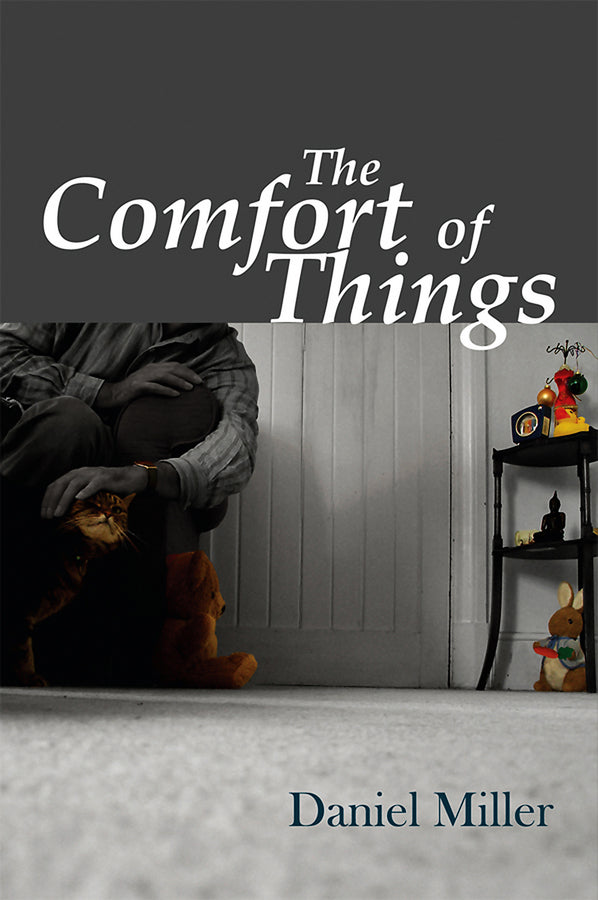

Description
Discover the profound insights of everyday life with this illuminating book that explores the lives of ordinary people in modern society. Through an engaging narrative, this insightful examination focuses on thirty households in a typical London street, revealing the aspirations, frustrations, and stories that lie behind closed doors. Readers will find that material possessions—like homes, pets, and cherished music—are not simply objects but vital expressions of identity and relationships. This compelling study goes beyond common perceptions of consumerism and materialism, showcasing how these elements intricately weave into the fabric of social connections between families, friends, and neighbors. With 300 pages of thoughtful analysis, this book invites you to reflect on what truly matters in our increasingly complex world. Whether you’re an anthropology enthusiast or simply curious about the intimate lives of others, this work provides a significant exploration into how we navigate our personal and collective realities. The book is brand new, published by John Wiley & Sons (UK) in 2009, and holds an ISBN of 9780745644042. Note: Shipping for this item is free. Please allow up to 6 weeks for delivery. Once your order is placed, it cannot be cancelled.
Note: Shipping for this item is free. Please allow up to 6 weeks for delivery. Once your order is placed, it cannot be cancelled.
Condition: BRAND NEW
ISBN: 9780745644042
Year: 2009
Publisher: John Wiley & Sons (UK)
Pages: 300
Description:
What do we know about ordinary people in our towns and cities,
about what really matters to them and how they organize their lives
today? This book visits an ordinary street and looks into thirty
households. It reveals the aspirations and frustrations, the
tragedies and accomplishments that are played out behind the doors.
It focuses on the things that matter to these people, which quite
often turn out to be material things ? their house, the dog,
their music, the Christmas decorations. These are the means by
which they express who they have become, and relationships to
objects turn out to be central to their relationships with other
people ? children, lovers, brothers and friends.
If this is a typical street in a modern city like London, then
what kind of society is this? It?s not a community, nor a
neighbourhood, nor is it a collection of isolated individuals. It
isn?t dominated by the family. We assume that social life is
corrupted by materialism, made superficial and individualistic by a
surfeit of consumer goods, but this is misleading. If the street
isn?t any of these things, then what is it?
This brilliant and revealing portrayal of a street in modern
London, written by one the most prominent anthropologists, shows
how much is to be gained when we stop lamenting what we think we
used to be and focus instead on what we are now becoming. It
reveals the forms by which ordinary people make sense of their
lives, and the ways in which objects become our companions in the
daily struggle to make life meaningful.
Note: Shipping for this item is free. Please allow up to 6 weeks for delivery. Once your order is placed, it cannot be cancelled.
Condition: BRAND NEW
ISBN: 9780745644042
Year: 2009
Publisher: John Wiley & Sons (UK)
Pages: 300
Description:
What do we know about ordinary people in our towns and cities,
about what really matters to them and how they organize their lives
today? This book visits an ordinary street and looks into thirty
households. It reveals the aspirations and frustrations, the
tragedies and accomplishments that are played out behind the doors.
It focuses on the things that matter to these people, which quite
often turn out to be material things ? their house, the dog,
their music, the Christmas decorations. These are the means by
which they express who they have become, and relationships to
objects turn out to be central to their relationships with other
people ? children, lovers, brothers and friends.
If this is a typical street in a modern city like London, then
what kind of society is this? It?s not a community, nor a
neighbourhood, nor is it a collection of isolated individuals. It
isn?t dominated by the family. We assume that social life is
corrupted by materialism, made superficial and individualistic by a
surfeit of consumer goods, but this is misleading. If the street
isn?t any of these things, then what is it?
This brilliant and revealing portrayal of a street in modern
London, written by one the most prominent anthropologists, shows
how much is to be gained when we stop lamenting what we think we
used to be and focus instead on what we are now becoming. It
reveals the forms by which ordinary people make sense of their
lives, and the ways in which objects become our companions in the
daily struggle to make life meaningful.